A curated register of quotes from under-represented voices.

Their Stories

Sylvia Rivera

Confirmed
TransLatinxLGBTQ+

Latina transgender activist present at the 1969 Stonewall uprising, who co-founded STAR (Street Transvestite Action Revolutionaries) with Marsha P. Johnson to house homeless queer and trans youth in New York. She died in 2002.

She fought to keep trans women and people of colour central to a gay liberation movement that often sidelined them, and spent what resources she had housing the young people the movement itself often ignored.

Her 2001 speech, widely archived online, is a direct primary source.

Sylvia Rivera

Angela Davis

Confirmed
WomenBlack

Scholar and activist whose work on race, gender and the prison system has shaped decades of organising. Briefly jailed and tried in the early 1970s after guns registered in her name were used in a courtroom takeover, she was acquitted and went on to a long academic and activist career arguing for the abolition of prisons and policing.

She turned her own prosecution into a global campaign for prisoners' rights, and has spent the decades since pushing people to imagine a justice system built on something other than incarceration. Her arguments remain central to how abolition is discussed today.

Her memoir and lectures, widely available online, are the fullest primary sources.

Audre Lorde

Confirmed
WomenLGBTQ+Black

Poet, essayist and librarian who described herself as 'black, lesbian, mother, warrior, poet.' Born in New York in 1934 to Caribbean immigrant parents, she used poetry and essays to name what others left unsaid about race, sexuality, class and illness.

She refused to be divided into acceptable parts, turning every piece of who she was into a source of strength. Generations of writers and organisers still borrow her words to name injustice and to insist on their own worth.

Her essays 'The Master's Tools' and 'Uses of the Erotic' reward the full text.

Audre Lorde

bell hooks

Confirmed
WomenBlack

Writer and scholar (born Gloria Jean Watkins) whose work on love, race, class and feminism reached far beyond academia. She wrote under a lowercase pen name, borrowed from her great-grandmother, to keep the focus on the ideas rather than herself.

She wrote about love and justice as things people practise, not just feel or believe in, and made feminist and anti-racist thought accessible to readers who had never encountered it in a classroom. Her books remain a common starting point for people new to this thinking.

'All About Love' and 'Teaching to Transgress' are the usual entry points.

Bell hooks

Billie Jean King

Confirmed
WomenLGBTQ+

One of the greatest tennis players of the twentieth century, who won the 1973 Battle of the Sexes and fought for equal prize money. Outed in 1981, she became one of sport's most prominent advocates for LGBTQ+ inclusion.

She used the biggest stage in her sport to win respect and equal pay for women, and lived openly when doing so cost her sponsors and money. She changed what was possible for the athletes who came after her.

Her memoir 'All In' gives the fullest account in her own voice.

Billie Jean King

Cate Blanchett

Confirmed
Women

Australian actor and two-time Academy Award winner who has been outspoken about pay equity in the film industry. She has served as a UNHCR Goodwill Ambassador since 2016, advocating for refugees.

She has used her standing in one of the industry's most unequal pay structures to speak plainly about that inequality, and has put real time into refugee advocacy rather than treating the ambassador role as symbolic.

Her UNHCR field reports and interviews are the fullest primary sources for that side of her work.

Cate Blanchett

Chimamanda Ngozi Adichie

Confirmed
WomenBlack

Nigerian novelist and essayist whose books, including 'Half of a Yellow Sun' and 'Americanah', are read worldwide. Her TEDx talk 'The Danger of a Single Story' and essay 'We Should All Be Feminists' brought her ideas to an audience well beyond literary fiction.

She writes about Nigeria, womanhood and identity with a clarity that travels across cultures without flattening her own. Her insistence that a single story is never the whole story has become a touchstone for how people think about representation.

'We Should All Be Feminists' is a short, direct entry point before the novels.

Chimamanda Ngozi Adichie

Christine Sun Kim

Confirmed
WomenAsianDisabled

Deaf sound artist whose work explores sound as a social and political construct rather than something she lacks access to. She performed an American Sign Language interpretation of the national anthem at Super Bowl LIV in 2020.

She reframes deafness not as an absence but as a different, equally valid way of experiencing the world, using an art form (sound) most people assume is closed to her. That reframing is the whole point of her work.

Her TED talk 'The Enchanting Music of Sign Language' is a good primary-source starting point.

Christine Sun Kim

Emma Watson

Confirmed
Women

British actor who grew up on screen as Hermione Granger in the Harry Potter films before studying English literature at Brown University. In 2014 she was appointed a UN Women Goodwill Ambassador and launched the HeForShe campaign for gender equality.

She used a platform built from childhood fame to make the case, on a UN stage, that gender equality is everyone's issue, not just women's, and put real institutional weight behind that campaign rather than treating it as a one-off appearance.

Her 2014 UN HeForShe speech is a direct primary source.

Emma Watson

Frida Kahlo

Confirmed
WomenDisabledLatinx

Mexican painter known for vivid self-portraits drawing on her heritage, politics and body. Childhood polio and a near-fatal bus accident left her with lifelong pain, which became central subject matter rather than something hidden.

She put her pain, her body and her heritage at the centre of her art rather than hiding them, and became a lasting emblem of turning suffering into something defiant and beautiful.

Her letters and paintings are firmer ground than the quotes attributed to her.

Frida Kahlo

George Powe

Confirmed
Black

Jamaican-born racial-equality campaigner who settled in Nottingham, UK, after serving in the RAF from age seventeen. He worked as an electrician and later a mathematics teacher, and led a successful 1956 campaign forcing the Raleigh Bicycle Company to improve its recruitment and treatment of Black workers. He went on to become one of Britain's first Black Labour councillors, serving on Long Eaton Urban District Council from 1963 and Nottinghamshire County Council from 1989, and co-founded the African Caribbean National Artistic Centre in Nottingham, still running today. He died in 2013.

He turned a personal fight against discrimination at one employer into decades of institution-building, from the council chamber to a community centre still open sixty years on. Nottingham named a bus after him in 2022 in recognition of that work.

His family's archive site, georgepowe.net, holds interview transcripts and personal papers, but nothing that reads as a standalone quote.

Greta Thunberg

Confirmed
WomenDisabled

Swedish climate activist who began a solitary school strike outside the Swedish parliament in 2018, aged 15, which grew into the global Fridays for Future movement. She is autistic and has spoken publicly about it as part of how she sees the climate crisis clearly.

She turned a single, quiet protest into a worldwide movement of young people demanding action on climate change, and has never softened her message to make adults more comfortable. Her bluntness became the point.

Her collected speeches, published as 'No One Is Too Small to Make a Difference', are a direct primary source.

Greta Thunberg

Ibram X. Kendi

Confirmed
Black

Historian and author of 'How to Be an Antiracist' and 'Stamped from the Beginning', which won the National Book Award. He founded the Center for Antiracist Research, first at American University and later at Boston University.

He reframed racism as something people actively do through policy, not a fixed identity, giving a wide public audience a working vocabulary for a debate that had often stayed academic.

'How to Be an Antiracist' is the direct primary source for his own framing.

Ibram X. Kendi

James Baldwin

Confirmed
BlackLGBTQ+

Novelist and essayist whose work on race, sexuality and belonging in America remains central reading. Born in Harlem in 1924, he wrote much of his sharpest work from France, at a distance that let him see his country clearly.

He told the truth about race and identity without flinching, and did it with a moral clarity and beauty that still changes how people see their own societies. He made honesty feel like courage.

'The Fire Next Time' and 'Giovanni's Room' are the usual entry points.

James Baldwin

Josephine Baker

Confirmed
WomenBlackLGBTQ+

Missouri-born entertainer who became one of France's most celebrated performers, taking Paris by storm in the 1920s. During the Second World War she worked with the French Resistance, smuggling coded messages hidden in her sheet music, and was later awarded the Croix de guerre. In 1963 she stood on the podium at the March on Washington as the only official female speaker.

She refused every box people tried to put her into (country, race, respectability, sexuality) and gave a country that had rejected her more than a country of birth had ever offered. In 2021 she became the first Black woman entombed in the Panthéon in Paris, a national honour France took nearly a century to grant one of its most fearless citizens.

Her memoirs and the biography by Jean-Claude Baker are the fullest primary sources.

Josephine Baker

Judith Heumann

Confirmed
WomenDisabled

A leader of the international disability rights movement, sometimes called its mother. Denied a school place as a child for being a fire hazard, she went on to help drive the 1977 Section 504 sit-in and the shaping of landmark accessibility law.

She refused to accept a world built to shut her out, and helped rewrite the law so millions of disabled people after her would not have to fight the same battles. She turned personal exclusion into lasting change.

Her memoir 'Being Heumann' is the primary source for her own framing.

Judith Heumann

Lonnie Johnson

Confirmed
Black

American engineer born in Mobile, Alabama in 1949, who worked on the Galileo and Cassini missions at NASA's Jet Propulsion Laboratory before turning to independent invention. In 1989 he patented the Super Soaker, built around pressurised-air water-gun technology he'd developed while working on a heat pump, which became one of the best-selling toys in history. He holds more than 100 patents and has spent decades of the royalties funding his own research into solid-state batteries and energy conversion.

He built a career at the edge of a field, aerospace engineering, that had very few Black engineers in it, then used the proceeds from a toy most people never connect to that career to keep funding harder, unglamorous energy research most companies wouldn't back. The Super Soaker's success bought him the freedom to keep inventing on his own terms.

No standalone quote from him has been verified for this site yet; his interviews and patent record are the primary sources for now.

Madam C.J. Walker

Confirmed
WomenBlack

Born Sarah Breedlove to formerly enslaved parents in Louisiana in 1867, she built a line of hair care products for Black women into a business empire, becoming widely regarded as the first self-made female millionaire in America. She employed thousands of Black women as sales agents.

She turned a product for Black women's hair, an area the wider beauty industry ignored, into one of the largest Black-owned businesses of her time, and used her wealth to fund education and civil rights causes. She built opportunity for the women she employed, not just herself.

Biographies by her great-great-granddaughter A'Lelia Bundles are the fullest primary-adjacent sources.

Madam C. J. Walker

Malala Yousafzai

Confirmed
WomenGlobal South

Pakistani education activist who campaigned for girls' schooling under Taliban rule, survived being shot in 2012, and became the youngest-ever Nobel Peace Prize laureate.

She was nearly killed for wanting to learn, and answered with a global campaign for the girls still denied an education. The courage that took, at her age, is almost impossible to imagine.

Her UN address and 'I Am Malala' are well-documented primary sources.

Malala Yousafzai

Margaret Graham

Confirmed
Women

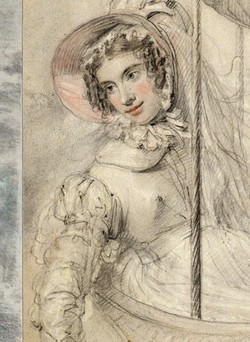
British aeronaut and the first British woman to make a solo balloon flight, ascending from Islington, London in 1826. She flew for decades, often alongside her husband George Graham, and later made the first nighttime balloon ascent by a woman, from Vauxhall Gardens. She's buried at Abney Park Cemetery in Hackney.

She flew solo at a time when the very idea of a woman piloting a balloon alone was a novelty worth advertising, and kept flying, including through a mid-air fire she survived, for decades.

Little of what she actually said survives beyond newspaper accounts of individual flights, so this profile focuses on her life rather than a direct quote.

Margaret Graham

Marsha P. Johnson

Confirmed
LGBTQ+TransBlackWomen

An activist and self-described drag queen central to New York's gay liberation movement and the 1969 Stonewall uprising. She co-founded STAR with Sylvia Rivera to support homeless queer and trans young people. Much of what circulates as her quotes is unverified.

She stood at the front of a movement that would not exist without her, and spent what little she had caring for the people everyone else ignored. Her joy and defiance still define what Pride is meant to mean.

Because so much attributed to her is uncertain, this profile leans on documented biography.

Marsha P. Johnson

Simone Biles

Confirmed
WomenBlack

American gymnast and the most decorated gymnast in world championship history. At the Tokyo 2020 Olympics she withdrew from several events, citing her mental health and a disorientation known as 'the twisties', and returned to compete at the Paris 2024 Games.

She used the biggest stage in her sport to say plainly that mental health comes before medals, at real cost to how some people saw her in the moment. That decision changed how elite sport talks about athletes' wellbeing.

Her post-Tokyo and Paris interviews are the clearest primary sources for her own framing.

Simone Biles

Sonia Sotomayor

Confirmed
WomenLatinx

The first Latina and third woman to serve on the US Supreme Court, appointed in 2009. She grew up in a Bronx housing project, was diagnosed with type 1 diabetes as a child, and has written about both in her memoir.

She reached the highest court in the country from a background the legal profession rarely draws from, and has been open throughout her career about how that experience shapes her judgment. Her presence on the bench changed who could see themselves there.

Her memoir 'My Beloved World' is the fullest primary source for her own story.

Sonia Sotomayor

Wangari Maathai

Confirmed
WomenBlackGlobal South

Kenyan environmentalist and the first African woman to win the Nobel Peace Prize, in 2004. She founded the Green Belt Movement in 1977, which has since organised the planting of tens of millions of trees across Kenya, led largely by women. She died in 2011.

She connected environmental restoration directly to women's economic independence and democratic rights, at a time when few treated those as the same struggle. The movement she built is still active today.

Her memoir 'Unbowed' and her Nobel lecture are the fullest primary sources.

Wangarĩ Maathai

Wilma Mankiller

Confirmed
IndigenousWomen

The first woman elected Principal Chief of the Cherokee Nation, serving from 1985 to 1995. Under her leadership the Cherokee Nation's citizenship, revenue and infrastructure programmes expanded significantly. She died in 2010.

She led the largest tribe in the United States through a period of real institution-building, at a time when many doubted a woman could hold the role at all. Her tenure reshaped what Cherokee self-governance looked like.

Her autobiography 'Mankiller: A Chief and Her People' is the fullest primary source.

Wilma Mankiller

Yuri Kochiyama

Confirmed
WomenAsian

Japanese-American activist interned with her family during the Second World War, who went on to organise alongside Malcolm X and across the Black, Asian-American and Puerto Rican independence movements for the rest of her life. She died in 2014.

She built solidarity across movements that are often kept separate, from Black liberation to Asian-American rights to Puerto Rican independence, arguing they shared the same fight. That cross-movement organising remains a model.

Interviews and archival footage from her later life are the clearest primary sources.

Yuri Kochiyama

Zendaya

Confirmed
WomenBlack

American actor who became the youngest woman ever, and the second Black woman, to win the Primetime Emmy for Outstanding Lead Actress in a Drama Series, for her role in 'Euphoria', a win she repeated in 2022.

She became one of the defining young actors of her generation while consistently using her visibility to talk about representation and mental health rather than treating fame as an end in itself.

Her Emmy acceptance speeches are direct primary sources.

Zendaya